Ambience Healthcare: Unified AI Platform for Clinical Workflows
Summary

As AI continues to transform industries by automating repetitive tasks and enabling humans to focus on higher‑value activities like critical thinking and human connection, healthcare administration remains an area where AI adoption lags, creating a significant blue‑ocean opportunity for AI solution providers and investors alike.
Ambience Healthcare stands out in this niche with a unified AI platform that spans the entire clinical and revenue cycle workflow, rather than serving as a single‑feature scribing tool. Unlike many peers selling “AI potential,” Ambience Healthcare demonstrates tangible impact with high utilization and measurable workflow improvements for its clients. Clinician adoption in 80% of clients’ scheduled visits shows clinicians are integrating the product into their default workflow, a major success given that most clinical tools fail to move beyond electronic health record (EHR) adjacency.
The platform drives a ~67% reduction in perceived cognitive burden and a ~49.6% decrease in note creation time, enhancing workload sustainability and supporting provider retention. Additionally, a 7% increase in same‑day chart closures and a 32% rise in face‑to‑face patient time directly improve both revenue cycle performance and patient experience, strengthening ROI for budget‑conscious health systems.
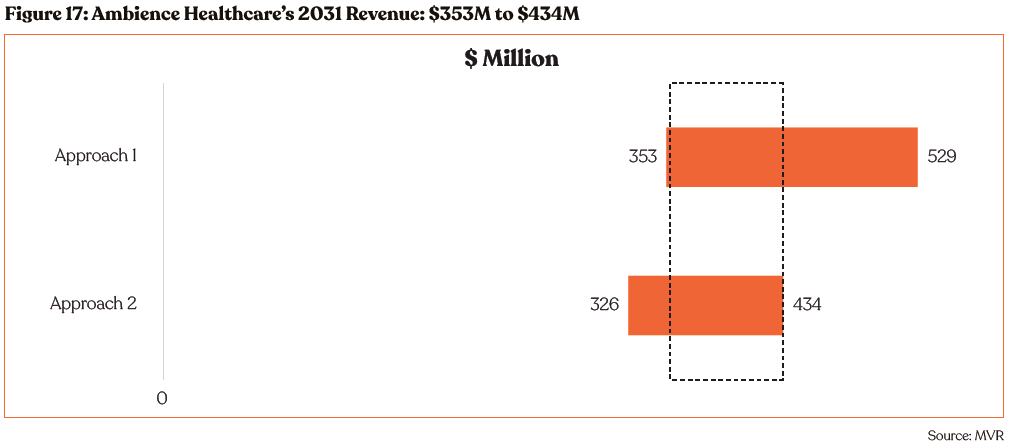
As a Series C company, Ambience combines proven enterprise adoption with substantial headroom for expansion and monetization. Manhattan Venture Research (MVR) projects its revenue to reach $51M–$77M in 2026, scaling to $353M–$434M by 2031.
Methodology
Our views on Ambience Healthcare are derived from our rigorous research process, involving proprietary channel checks with users, competitors, and industry experts, and synthesizing publicly available information from the company and other reliable sources.
Key Points
Proven Product-Market Fit: Ambience Healthcare shows clear product‑market fit, with third‑party validation from KLAS, a healthcare research company, and rapid uptake in demanding US health systems. High utilization in scheduled visits indicates the tools are embedded in default clinician workflows rather than sitting unused alongside the EHR. Reported reductions in cognitive burden and documentation time, along with improvements in same‑day chart closure and face time with patients, translate directly into better provider satisfaction and revenue cycle performance.
Specialty‑Specific Solutions Creates Moat: Ambience Healthcare is not a generic AI scribe; it delivers specialty‑tuned workflows across 200+ clinical areas, including complex and historically underserved specialties, which materially raises the bar for competitors to match depth and breadth. It offers a unified AI layer spanning documentation, CDI, coding, billing, after‑visit summaries, referrals, and patient communication, creating a reusable system of record for unstructured clinical data.
Layered Expansion Across Clinical Workflows Ensures Defensibility: Because the platform touches multiple high‑value workflows—documentation, CDI, coding, billing, and patient engagement—Ambience can price against both hard ROI (productivity, revenue capture) and soft ROI (burnout reduction, satisfaction). The same infrastructure can land with ambient scribing in one department, then expand horizontally across specialties and sites and vertically into adjacent automation modules, driving expansion while tapping into a multi‑hundred‑billion‑dollar pool of avoidable administrative spend and burnout‑driven costs.
‘EHR‑Native-Like’ Integration and Robust Compliance Ensure Long-Term Stickiness: Ambience is tightly integrated into Epic as a native‑like experience and writes back directly into Oracle Health (Cerner), giving it leverage across a large share of US hospitals without bespoke one‑off integrations and meaningfully increasing switching costs. A mature security and compliance posture (SOC 2 processes, formal governance, board‑level oversight, structured communication and support practices) reinforces buyer trust, lowers security‑review friction, and supports enterprise‑grade, long‑duration contracts.
Key Challenges: Competitive Intensity and Concentration Risk: If EHR-native solutions reach “good enough” quality at lower incremental cost, customer base could switch. Additionally, heavy reliance on a small set of marquee health systems for a large share of revenue introduces concentration risk.
Valuation: Ambience Healthcare’s last reported private valuation was $1.3B as of July 2025. Manhattan Venture Research (MVR) projects Ambience Healthcare’s 2026 revenue between $51M and $77M, with a trajectory toward $353M - $434M by 2031.

Executive Summary
Founded in 2020, Ambience Healthcare is a high-growth healthcare AI company delivering enterprise-grade solutions for Clinical Documentation Integrity (CDI) and automated patient summaries. The company’s ambient AI platform streams clinical conversations through HIPAA-compliant infrastructure and leverages specialty-tuned large language models to generate structured, audit-ready documentation in real time.
Ambience Healthcare supports more than 200 medical specialties and integrates natively with leading EHR systems, including Epic, Oracle Cerner, and Athenahealth. The platform is designed for rapid enterprise deployment, with an average implementation timeline of four weeks. Operational performance metrics demonstrate strong product-market fit, including 80% average clinician utilization and a 45% reduction in charting time, directly addressing one of healthcare’s most acute administrative burdens.
The company has demonstrated strong investor conviction and valuation momentum, achieving a 223% valuation increase in its most recent funding round. Its customer base includes prominent healthcare organizations such as Ardent Health, John Muir Health, and Alpine Physical Partners, among others. Ambience Healthcare is backed by leading venture investors, including Andreessen Horowitz, Oak HC/FT, Kleiner Perkins, and the OpenAI Startup Fund, among others.
The ambient AI documentation category is experiencing rapid capital inflows and enterprise adoption. Over the past 18 months, AI scribe companies have collectively raised over $1.5 billion (Forbes, December 2025), reflecting accelerating institutional confidence in AI-driven clinical workflow automation.
The broader US healthcare system represents an approximately $5 trillion annual market, with an estimated $740 billion allocated to administrative functions. However, less than 0.1% of administrative spend currently leverages AI (Menlo Ventures), underscoring a significant underpenetrated opportunity. As health systems prioritize efficiency, compliance, and clinician retention, AI-enabled workflow automation is poised to capture a meaningful share of administrative expenditure.
With a comprehensive ambient AI platform addressing end-to-end clinical workflows, strong enterprise traction, and favorable market tailwinds, Ambience Healthcare is well positioned to capitalize on the next phase of AI adoption in healthcare administration.
Why Now?
Ambience Healthcare is positioned at the convergence of three structural tailwinds in healthcare: the inflection point of ambient AI, an acute clinician burnout crisis, and ecosystem readiness for AI-native workflows.
Ambient AI has crossed a critical quality and latency threshold. Real-time, in-workflow assistance is now viable at enterprise scale, enabling true clinical copilots—not just post-visit transcription. This unlocks meaningful workflow automation at the point of care.
Additionally, health systems are operating under significant financial and operational strain. Clinician burnout, staffing shortages, and escalating documentation and coding complexity are driving urgent demand for solutions that return time to providers while safeguarding reimbursement. There is strong economic pull for platforms that simultaneously improve clinician experience and revenue integrity.
Moreover, EHR ecosystems have matured. Open APIs, app marketplaces, and cloud infrastructure have materially lowered integration friction, allowing third-party AI platforms to embed deeply into core workflows and scale across multi-site enterprises.

Company Overview
Ambience Healthcare claims to be the only AI platform designed to power the entire clinical workflow, connecting every step before, during, and after the patient visit to improve decisions, documentation quality, compliance, and revenue capture.
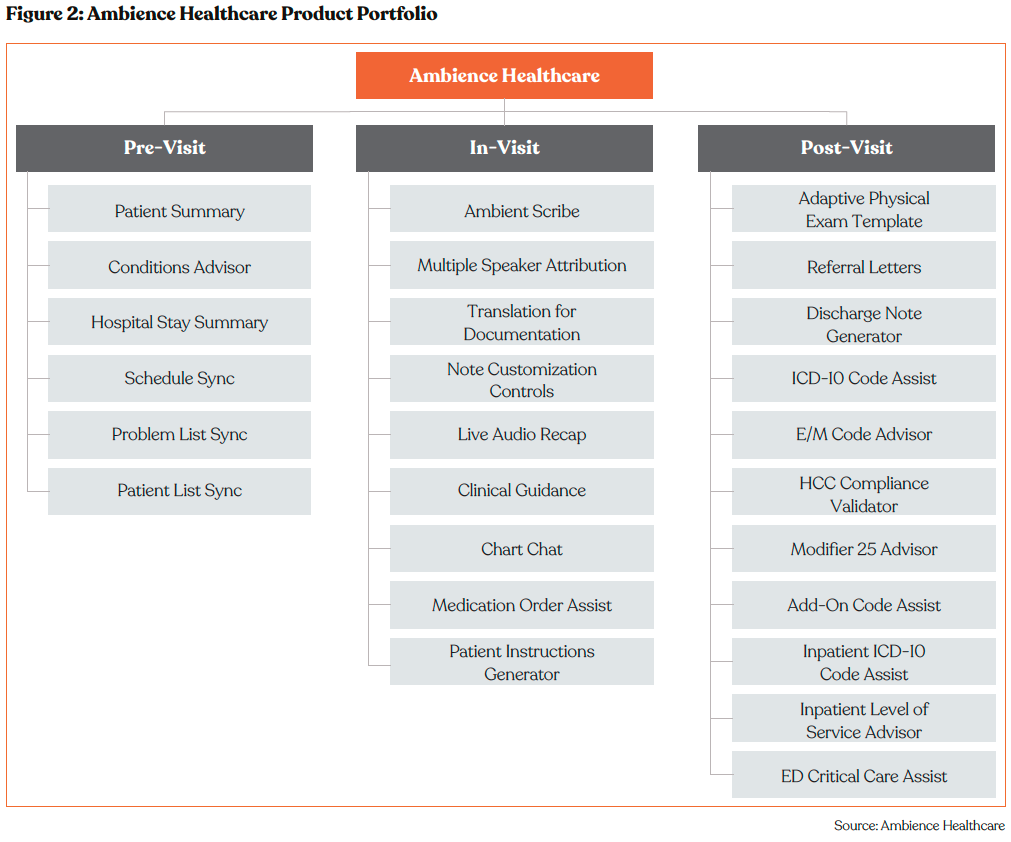
Pre-Visit
- Patient Summary: Provides configurable, specialty‑tailored views that synthesize a patient’s history and real‑time status to support fast, safe clinical decision‑making.
- Conditions Advisor: Mines the full patient record to surface clinically relevant evidence at the point of care, enabling clinicians to identify, assess, and document the complete spectrum of patient conditions for more accurate treatment and coding.
- Hospital Stay Summary: Delivers a concise, admission‑level recap of the inpatient course, helping hospitalists quickly orient to each case, coordinate handoffs, and act on the most critical information.
- Schedule Sync: Pulls provider calendars from Epic, Athena, and Cerner into Ambience Healthcare so clinicians can start documenting visits without extra setup or manual data entry.
- Problem List Sync: Integrates with problem lists in Epic, Athena, and Cerner to keep Ambience Healthcare aligned with the most current clinical picture for every encounter.
- Patient List Sync: Connects to Epic MyList, enabling clinicians to launch Ambience Healthcare recordings directly for actively managed patients, even within larger complex care teams.
In-Visit
- Ambient Scribe: Automatically generates complete, coding‑ready clinical notes from clinician–patient conversations, tailored by specialty and documentation style.
- Multiple Speaker Attribution: Distinguishes and labels speech from clinicians, patients, caregivers, and interpreters in real time, preserving clinical clarity and reducing note ambiguity.
- Translation for Documentation: Converts multilingual clinical conversations into English on the fly, ensuring complete, accurate documentation even when participants speak different languages.
- Note Customization Controls: Provides configurable, specialty‑tailored views that synthesize a patient’s history and real‑time status to support fast, safe clinical decision‑making.
- Live Audio Recap: Streams a concise, real‑time summary of the clinical conversation, enabling efficient pre‑charting and rapid context switching between rooms.
- Chart Chat: Provides on‑demand, in‑workflow clinical guidance by answering chart‑specific questions in real time, delivering reliable decision support at the point of care.
- Medication Order Assist: Proactively recommends appropriate medication orders during the visit by leveraging patient history, the live clinical conversation, and evidence‑based best practices.
- Patient Instructions Generator: Automatically produces clear, layperson‑friendly discharge and follow‑up instructions, summarizing next steps, medications, and key takeaways in simple language.
Post-Visit
- Adaptive Physical Exam Template: Automatically learns each clinician’s preferred normal findings and note structure, then updates future physical exam notes in real time with no additional effort.
- Referral Letters: Auto-generates structured referral letters directly from the visit transcript, ensuring accurate handoffs and minimizing manual documentation for specialty referrals.
- Discharge Note Generator: Instantly produces complete, compliant inpatient discharge summaries to speed provider wrap‑up and optimize downstream billing.
- HPI Generator: Automatically creates a structured History of Present Illness from the visit transcript and chart context, capturing symptoms, duration, and relevant details without manual entry.
- Assessment & Plan Generator: Produces problem-based A&P documentation that mirrors the clinical discussion, supports billed ICD‑10 codes, maintains MEAT compliance, and is continuously audited for accuracy.
- ED MDM Generator: Generates the impression and medical decision-making for emergency department visits in real time, aligned to ED-specific workflows.
- ICD‑10 Code Assist: Surfaces the most accurate ICD‑10 codes post‑visit to improve documentation quality and cut rework.
- E/M Code Advisor: Guides clinicians to the correct E/M level and code to ensure compliant, optimized billing.
- HCC Compliance Validator: Continuously scans documentation to flag HCC-related conditions without sufficient MEAT support, enabling correction before compliance is impacted.
- Modifier 25 Advisor: Identifies visits where new or acute issues qualify for Modifier 25 and recommends appropriate additional E/M codes to ensure compliant reimbursement.
- Add-On Code Assist: Flags billable add-on services, such as smoking cessation or psychotherapy, using real-time visit context to capture all eligible revenue.
- Inpatient ICD‑10 Code Assist: Delivers precise inpatient ICD‑10 code recommendations from complex chart data to improve coding specificity and reduce queries.
- Inpatient Level of Service Advisor: Guides inpatient teams to the correct level of service with in-line recommendations and supporting rationale.
- ED Critical Care Assist: Detects when critical care is being delivered in the ED and prompts clinicians to complete compliant documentation, reducing missed revenue and audit risk.
Competitive Benchmarks
The AI scribe market is expanding rapidly, but solution quality varies significantly. The Cleveland Clinic tested this through a comprehensive evaluation of leading AI scribe platforms. Ambience Healthcare emerged as the top performer, earning a five-year exclusive partnership.
The findings of the evaluation were:
- AI that adapts to specialties: Ambience Healthcare’s AI dynamically tailors to individual medical specialties rather than applying a one-size-fits-all approach.
- Fixing documentation at the source: By aligning documentation with revenue cycle needs, Ambience Healthcare minimizes downstream billing and coding issues.
- Real-time, no cleanup required: Ambience Healthcare instantly generates structured, ready-to-sign clinical notes, eliminating post-visit editing.
Throughout 2024, Cleveland Clinic’s evaluation assessed five leading AI scribe platforms across more than 80 specialties and subspecialties, with Ambience Healthcare consistently outperforming competitors.
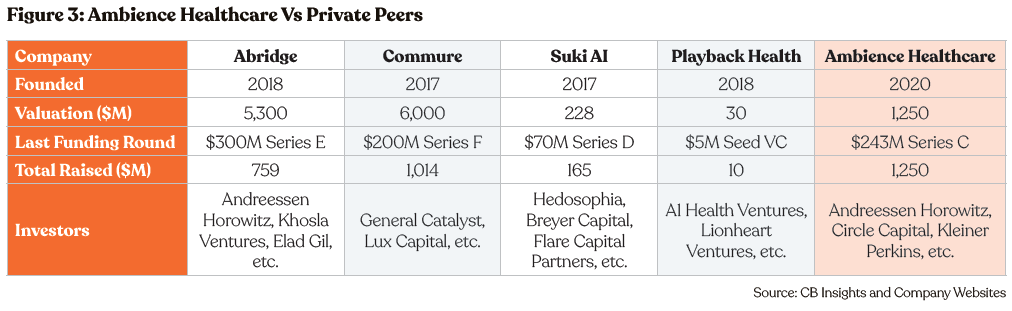
From a capital allocation perspective, Ambience Healthcare sits in a compelling window of the market cycle. More mature players such as Abridge and Commure have achieved significant scale, which may limit early-stage entry opportunities. At the same time, earlier-stage platforms like Suki AI and Playback Health are still in earlier commercialization phases.
Ambience Healthcare represents a strategic middle ground: validated by a top-tier health system, deployed at enterprise scale, yet with substantial whitespace for expansion across service lines, health systems, and revenue cycle monetization layers.
At a macro level, AI penetration in healthcare administration remains in the early stages of adoption. The addressable market is substantial and expanding, creating sufficient headroom for multiple scaled winners.

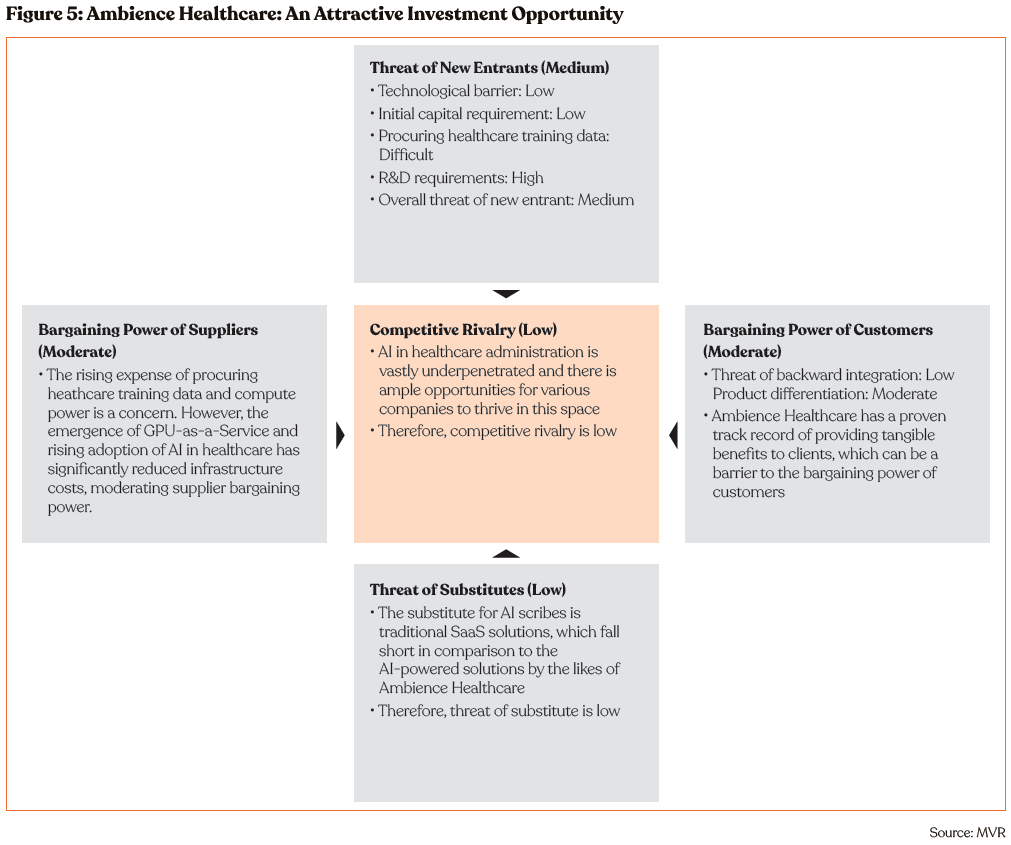
Ambience Healthcare – Strong Competitive Position
Ambience Healthcare operates in a market where the threat of new entrants is moderate. Technological barriers to entry remain relatively low, and capital requirements are not prohibitively high compared to other healthcare technology sectors. However, access to high-quality healthcare training data is a significant constraint for newcomers, creating a natural moat for established players. Additionally, the capital-intensive R&D requirements and regulatory compliance further limits the pace at which new entrants can scale.
The bargaining power of customers is moderate. While healthcare organizations have alternatives to choose from, Ambience Healthcare’s diversified AI-powered offerings and track record in clinical documentation reduce the likelihood of customer switching or backward integration.
Competitive rivalry in the AI healthcare administration space remains low. This segment is still early in its adoption curve, and overall market penetration is limited. The opportunity landscape is expansive enough to support multiple players addressing diverse administrative challenges without immediate competitive saturation.
The threat of substitutes is low. Traditional SaaS-based documentation systems do not match the efficiency, accuracy, or contextual understanding offered by advanced AI scribe solutions like Ambience Healthcare’s. As a result, substitution risk is minimal, with AI-based offerings rapidly becoming the preferred standard.
Lastly, the bargaining power of suppliers is moderate. While the cost of healthcare-specific datasets and compute power remains a consideration, the evolving availability of GPU-as-a-Service infrastructure and the broader adoption of AI across healthcare are driving down costs. Moreover, massive investments by tech giants into building data centers will also bring down compute power costs in the coming years. These trends collectively temper supplier leverage and support sustainable scaling dynamics for Ambience Healthcare.
Key Positives
Proven Product Market Fit
Ambience Healthcare has demonstrated exceptional product-market fit through independently validated outcomes and rapid enterprise adoption at the US’ most demanding healthcare institutions. The company's differentiation is evidenced by rigorous third-party validation from KLAS Research.
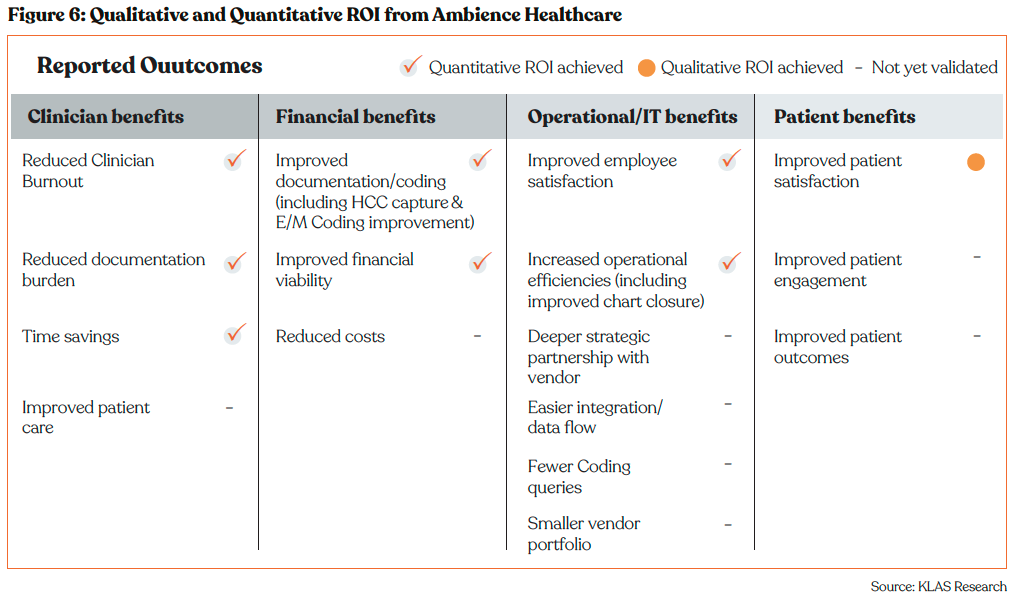
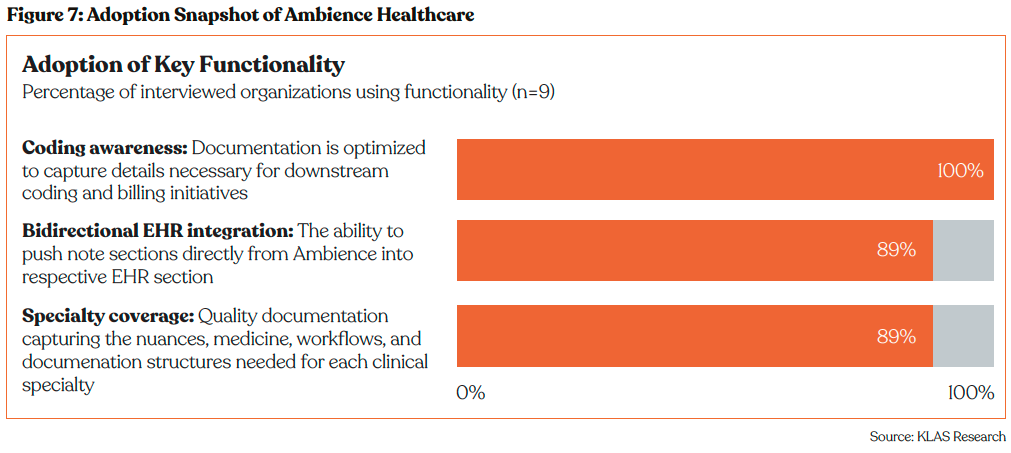
Strong Proof Points on Adoption and Outcomes: The company is not selling “AI potential”; it already shows high utilization and measurable workflow improvement. An 80% adoption rate in scheduled visits indicates clinicians are using the product as part of their default workflow, addressing a classic failure point for clinical software where tools sit unused alongside the EHR. Reductions of ~67% in perceived cognitive burden and ~49.6% in note creation time translate into more sustainable workloads and directly support provider retention and satisfaction, which are board‑level priorities for health systems. A 7% lift in same‑day chart closure and a 32% increase in face‑to‑face time with patients link directly to better revenue cycle performance and improved patient experience scores, which strengthens the ROI story for budget‑constrained hospital executives.

Specialty Specific Solutions Creates Moat
A generic, one-size-fits-all model for workflows, documentation, and coding does not meet the needs of many specialists who rely on this support the most. Ambience Healthcare aligns to the specific language, priorities, and workflows of 200+ specialties, including complex and underserved areas.
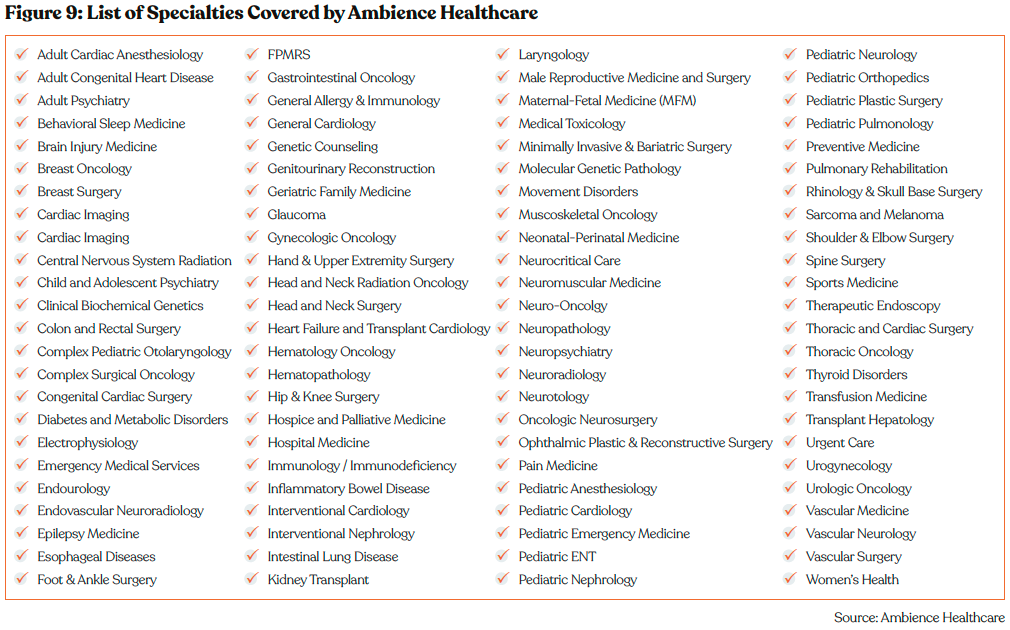
Comprehensive AI platform, not a Point Solution: Ambience Healthcare is building a unified AI layer that spans the full clinical and revenue cycle workflow, rather than a single‑feature scribing tool. The suite (AutoScribe, AutoCDI, AutoAVS, AutoRefer) covers documentation, clinical documentation integrity, after‑visit summaries, referrals, coding, billing, and patient communication in a single connected stack. This creates a system of record for unstructured clinical data that can be reused across multiple downstream workflows, improving data quality and enabling cross‑product reinforcement over time. For a health system CIO/CMIO (Chief Information Officer/ Chief Medical Information Officer), this looks like an “AI operating system” decision, not a lightweight SaaS procurement, which supports larger contract sizes and stickier, system‑wide deployments.
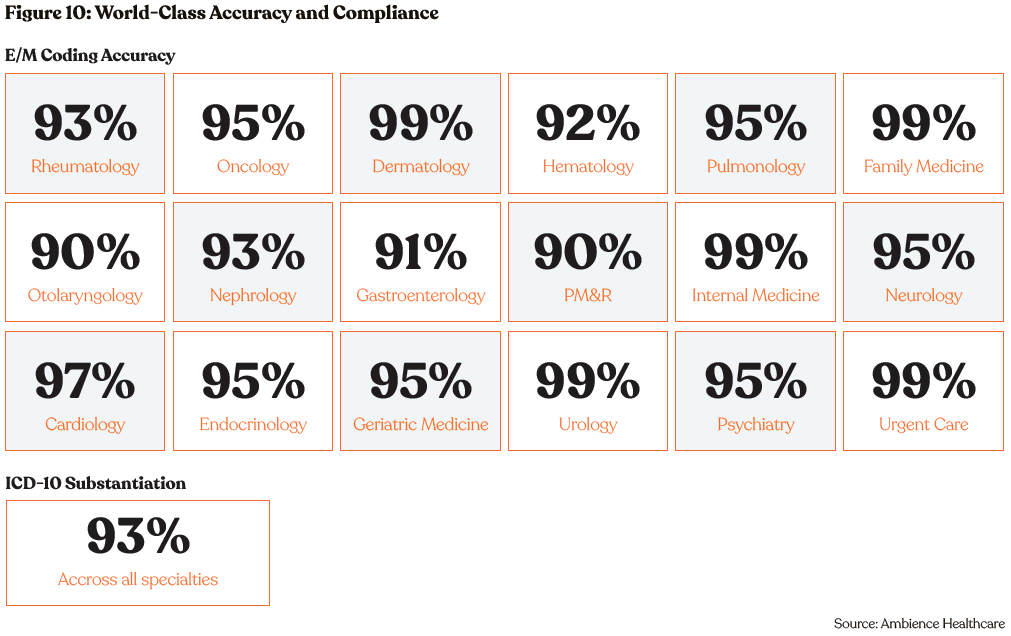
Ambience Healthcare captures the complete clinical story in real time, then enhances it with the right codes, standards, and structure. This delivers stronger documentation at the point of care, so you can bill confidently, reduce audit risk, and improve productivity across the enterprise, documentation that pays for itself.
Ambience Healthcare strengthens revenue integrity by surfacing add‑on codes, ICD‑10s (International Classification of Diseases, Tenth Revision), E/M (Evaluation and Management) levels, and inpatient acuity. It connects what was said to what gets billed, ensuring documentation reflects the full value of care delivered without leaving money behind.

Layered Expansion Across Clinical Workflows Ensures Defensibility
Because Ambience Healthcare touches multiple high‑value workflows (documentation, CDI, coding, billing, patient engagement), it can justify pricing against both hard and soft ROI: reduced documentation time, higher provider throughput, better chart closure, improved revenue capture, and reduced burnout‑related turnover. The same platform can expand horizontally across specialties and care settings (inpatient, outpatient, ambulatory) and vertically across use cases (new automation modules leveraging the same clinical data exhaust). This creates a classic land‑and‑expand dynamic: start with ambient scribing in a department, then layer CDI, billing optimization, and patient‑facing summaries and communication, growing ACV per health system over time while strengthening the moat around the core platform.
Zooming out, Ambience Healthcare is attacking one of the largest cost and burnout drivers in healthcare: administrative and documentation overhead. External benchmarks indicate that ambient AI scribes can collectively save physicians upwards of 15,000 hours annually and unlock an estimated $200–$360 billion in avoided administrative spending, creating a clear macro‑level value pool that can support multiple large outcomes in the category. At the same time, nearly half of physicians report at least one symptom of burnout, and documentation load is consistently cited as a primary contributor, making solutions that reduce admin time strategically important for health systems and payors. Studies suggesting AI can remove up to 70% of administrative burden underscore that this is not a marginal efficiency play but a step‑change in how clinical staff time is allocated, from low‑value data entry to higher‑value clinical and operational work.
'EHR-Native-Like’ Integration and Robust Compliance Ensure Long-Term Stickiness
From a defensibility and go‑to‑market standpoint, Ambience Healthcare is not fighting the EHR; it is riding on top of it. Functioning as a native‑like experience inside Epic, the largest EHR vendor in the US, dramatically lowers friction for clinicians who are already trained on Epic and are reluctant to adopt parallel tools. Direct API‑based writeback into Oracle Health (Cerner), the second‑largest EHR, gives Ambience Healthcare leverage across a substantial share of US hospitals without bespoke, one‑off integrations per site. This level of technical integration increases switching costs, as health systems would need to re‑plumb mission‑critical documentation and billing workflows to replace Ambience, which favors long‑term contracts and expansion motions (more sites, more departments, more use cases) over time.
Additionally, Ambient Healthcare holds strong compliance, affirming its credibility.
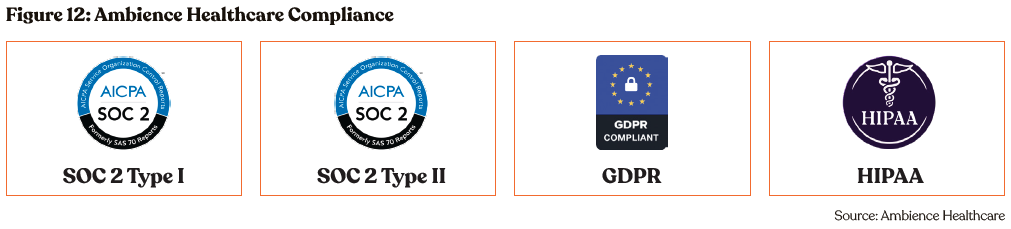
Ambience Healthcare has the following structure in place to ensure strong compliance, boosting customer trust and propelling adoption.
Infrastructure Security
- Unique account authentication enforced: All system and application access requires unique user credentials or authorized SSH keys.
- Unique network system authentication enforced: Access to the production network requires unique user credentials or authorized SSH keys.
Organizational Security
- Mobile Device Management (MDM) system implemented: A centralized MDM system is used to manage mobile devices supporting company services.
Product Security
- Control self-assessments conducted annually: The company performs yearly control assessments to verify operational effectiveness. Identified issues are remediated within defined SLAs.
Internal Security Procedures
- Cybersecurity insurance maintained: The company holds cybersecurity insurance to mitigate potential financial risks from disruptions.
- SOC 2 system description completed: A full system description has been prepared for Section III of the SOC 2 audit report.
Governance and Oversight
- Board oversight briefings held annually: Senior management briefs the board or relevant subcommittees on cybersecurity and privacy risks at least once per year.
- Board charter documented: The board’s charter defines oversight responsibilities for internal controls.
- Board expertise ensured: The board possesses sufficient expertise to oversee security governance and consults external security experts as necessary.
- Board meetings conducted annually: The board meets at least once per year, maintaining formal minutes and including independent directors.
Communication and Support
- Critical system changes communicated externally: Customers are notified of significant system updates affecting their operations.
- Organization structure documented: An organizational chart outlines structure and reporting lines.
- Support system available: An external-facing support platform enables users to report incidents, issues, and feedback to the appropriate teams.
- Company commitments communicated: Security commitments are defined in MSAs and Terms of Service.
- External support resources provided: Customers receive operational guidelines and technical support resources.
- Service descriptions shared: Product and service information is communicated to internal and external stakeholders.
Key Challenges
Competitive Intensity and Commoditization Risk
Ambient clinical documentation has become a crowded category, with well-capitalized incumbents (EHR vendors, large transcription players) and newer foundation-model startups all racing to sell “AI scribes” to the same hospital buyers. Several competitors are embedding ambient functionality directly into core EHR workflows or bundling it with broader rev-cycle/analytics suites, which can compress pricing and erode differentiation over time. A key concern is whether Ambience Healthcare can maintain a durable edge in model performance, workflow depth, and multi-specialty coverage as general-purpose models improve and hospitals increasingly favor platform consolidation. If the product is perceived as “nice-to-have” point software rather than infrastructure, it may be vulnerable when budgets tighten or when EHR-native solutions reach “good enough” quality at lower incremental cost.
Health Systems Complexity and Concentration Risk
Despite strong early ROI signals, adoption in health systems remains gated by long sales cycles, complex security/compliance reviews, and integration work across heterogeneous EHR environments. Expanding from flagship systems to broad enterprise penetration requires repeatable implementation playbooks, deep IT partnerships, and evidence that ROI holds across service lines, provider types, and reimbursement regimes. Any cracks in the ROI story, e.g., if measured productivity uplifts or coding gains fail to generalize beyond lighthouse customers, could slow down renewals and expansions, particularly as CFOs scrutinize all SaaS spend. In addition, heavy reliance on a small set of marquee health systems for a large share of revenue introduces concentration risk: changes in strategic priorities, leadership turnover, or a data/security incident at one large customer could disproportionately impact growth and reputation.
Industry Overview
Clinical documentation has long been a primary driver of physician burnout, as extended after-hours work, often referred to as “pajama time”, spent on notes, orders, and reviews continues to diminish physician satisfaction and patient engagement.
Ambient AI scribes are addressing this challenge by transcribing and summarizing patient-physician interactions in real time, allowing doctors to focus on direct patient care rather than documentation. Unlike clinical decision support tools, AI scribes do not generate diagnoses or treatment recommendations; they passively record conversations and produce editable drafts of clinical notes for physician review.
"This technology demonstrably reduces physician workloads. Both doctors and patients place high value on personal interaction, and AI scribes enhance that experience." - Vincent Liu, Research Scientist at Kaiser Permanente’s Division of Research and TPMG Chief Data Officer
In a 63-week study spanning October 2023 through December 2024, TPMG (The Permanente Medical Group) physicians achieved statistically significant reductions in note-taking time, time per appointment, and overall pajama time with the adoption of AI. The evaluation included 7,260 Permanente physicians across 2,576,627 patient encounters.
The benefits of AI scribes extend beyond efficiency gains. In the evaluation, 84% of physicians reported improved patient communication, and 82% noted higher overall job satisfaction. Departments with traditionally heavy documentation demands, such as mental health, primary care, and emergency medicine, saw the highest adoption rates.
Patients also recognized the difference: 47% observed less screen time from their physicians, 39% felt doctors spent more time engaging directly, and 56% reported a better overall visit experience, with zero negative responses.

These outcomes suggest that AI scribes not only reduce administrative fatigue but also help reestablish the human connection central to quality care.
According to a March 2024 Microsoft–IDC study, 79% of healthcare organizations are already deploying AI technologies. These implementations deliver an average ROI within 14 months, generating $3.2 for every $1 invested. AI’s transformative potential spans key domains such as medical imaging analysis, predictive analytics, personalized treatment planning, and drug discovery, redefining traditional healthcare models.
The global shortage of healthcare professionals accelerates AI and ML adoption. The WHO projects a shortfall of 11 million health workers by 2030. In response, AI algorithms are being leveraged to analyze patient data, enabling faster diagnosis and improved treatment planning.
AI and ML integration targets improved patient outcomes, reduced equipment downtime, and lower care delivery costs, fueling wider market growth. Globally, AI in healthcare is primarily governed under Software as a Medical Device (SaMD) regulation, applying risk-based frameworks across jurisdictions. The International Medical Device Regulators Forum (IMDRF) further advances regulatory harmonization through its 2025 publication on Good Machine Learning Practice (GMLP), outlining 10 guiding principles for AI/ML-enabled medical devices. Its framework standardizes SaMD risk categorization and total product lifecycle (TPLC) oversight, addressing adaptive algorithms, cybersecurity, and post-market monitoring.
Financials
Ambience Healthcare’s Revenue Estimates – MVR Analysis

The projections presented here are intended as directional estimates, for understanding the potential scale of opportunity Ambience Healthcare could capture by 2031. They offer a framework to think about how the adoption of AI in healthcare may evolve and where Ambience Healthcare’s business could position itself within that trajectory.
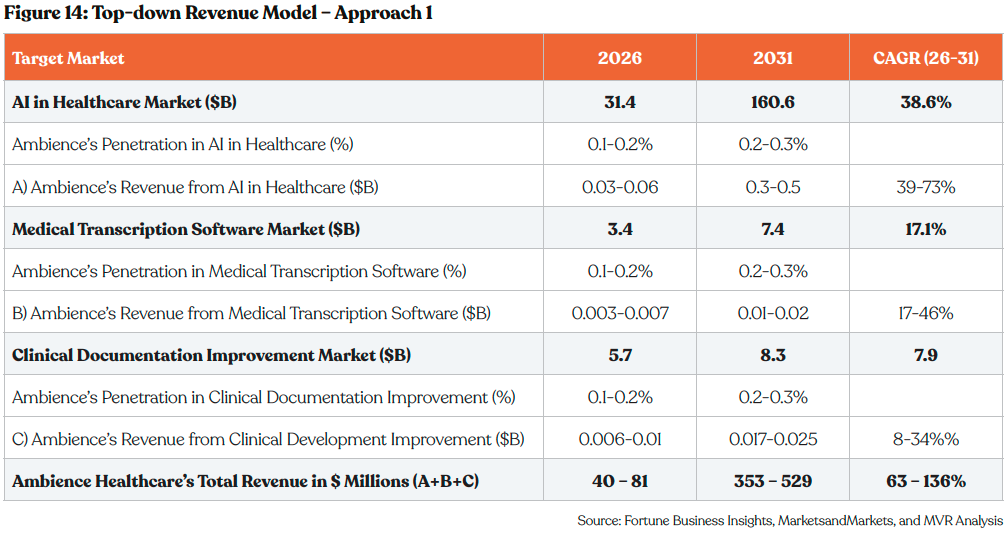
The global AI in healthcare market is projected to expand from roughly $31.4 billion in 2026 to about $160.6 billion by 2031 at a CAGR of 38.6%, extrapolating data provided by MarketsandMarkets. Additionally, the global medical transcription software market is projected to grow from roughly $3.4 billion in 2026 to $7.4 billion by 2031, extrapolating data provided by Fortune Business Insights. Moreover, the global clinical documentation improvement market is projected to grow from $5.7 billion in 2026 to $8.3 billion by 2031, extrapolating data provided by MarketsandMarkets. Assuming Ambience Healthcare secures between 0.1% and 0.2% market share of these markets by 2026, and potentially 0.2% to 0.3% by 2031, its revenues could fall somewhere in the range of $40–$81 million in 2026 and $80–$161 million in 2031, an early indication of how traction could translate into tangible revenue expansion.
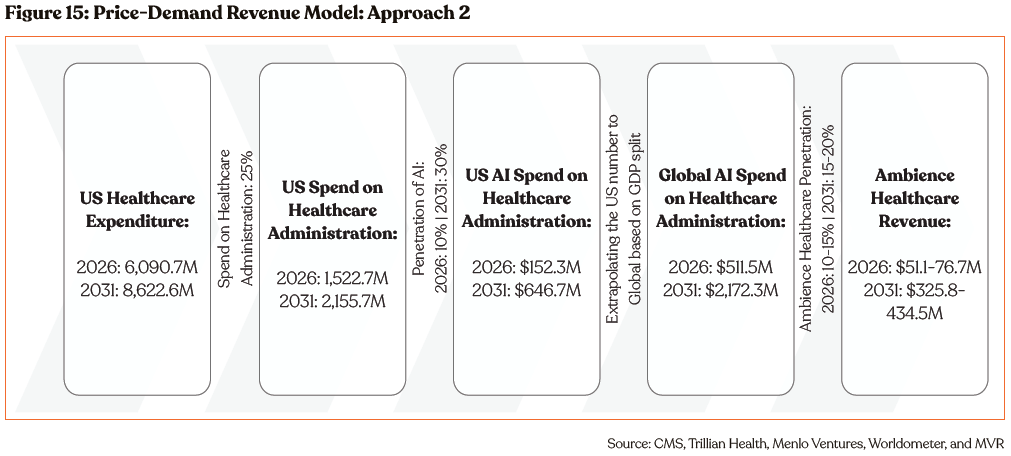
The US’ healthcare expenditure reached an estimated $5.3 billion in 2024, reflecting a 7.2% increase from 2023, according to data from the Centers for Medicare & Medicaid Services (CMS). Projecting this trajectory forward suggests total expenditures of approximately $6.1 billion by 2026 and $8.6 billion by 2031.
Research by Trillian Health indicates that administrative functions typically comprise 20–30% of overall healthcare spending in the US. Applying the midpoint of this range (25%) yields estimated administrative expenditures of $1.5 billion in 2026 and $2.2 billion in 2031.
According to Menlo Ventures, AI currently accounts for only 0.1% of total healthcare administration spending. However, given AI’s rapidly expanding role in optimizing administrative efficiency, we anticipate its share will rise to 10% by 2026 and 30% by 2031. On this basis, AI-related spending within the US healthcare administration is projected to reach $152.7 million in 2026 and $646.7 million in 2031.
The US represents approximately 29.8% of global GDP. Assuming a proportional distribution of healthcare AI expenditure worldwide, global AI expenditure in healthcare administration can therefore be estimated at $511.5 million in 2026 and $2.2 billion in 2031.
Under these assumptions, Ambience Healthcare is well-positioned to capture an estimated 10–15% share of this market by 2026 and 15–20% by 2031. This translates to projected revenues of $51.1–$76.7 million in 2026, expanding to $325.8–$434.5 million by 2031.


Implied Private Market Valuation

Ambience Healthcare currently lacks direct public market comparable; however, parallels can be drawn from tech giants that have AI scribes as one of the offerings amidst their huge portfolio and established enterprise AI firms that have accessed public capital markets.
Among the most relevant comparable are Microsoft, Oracle, Augmedix, C3.ai, LivePerson, and ServiceNow. Microsoft’s Nuance Dragon Copilot is an AI-powered clinical documentation suite and Oracle offers health clinical AI agent. Augmedix, an AI-powered clinical documentation company, was acquired by Commure in 2024; accordingly, its acquisition valuation and associated revenue multiple are incorporated into this analysis. In the enterprise AI comps, C3.ai offers a platform for developing and deploying AI solutions across various industrial sectors, including oil and gas, manufacturing, and retail. LivePerson specializes in conversational AI and commerce software, while ServiceNow offers a natively integrated AI platform tailored for rapid deployment within enterprise workflows.
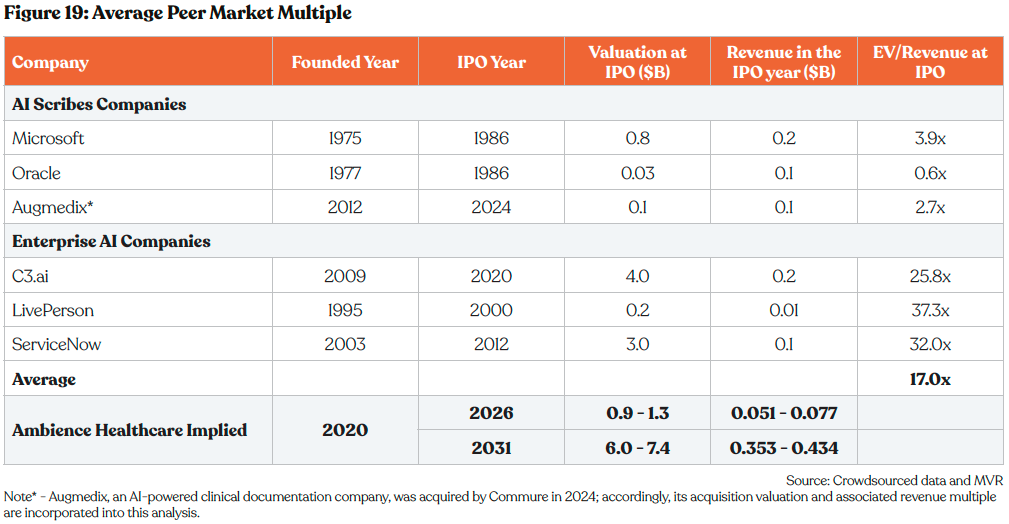
At the time of their respective initial public offerings (and acquisition in case of Augmedix), these companies were valued at $0.8 billion (Microsoft), $0.03 billion (Oracle), $0.1 billion (Augmedix), $4.0 billion (C3.ai), $0.2 billion (LivePerson), and $3.0 billion (ServiceNow). Their annual revenues at that time were roughly $197 million, $55 million, $52 million, $157 million, $10 million, and $90 million, respectively. These figures yield EV/Revenue multiples of 3.9x, 0.6x, 2.7x, 25.8x, 37.3x, and 32.0x. Averaging across these six data points produces an implied EV/Revenue multiple of approximately 17x.
Applying this to Ambience Healthcare’s revenue projections (MVR estimates), a valuation range of $6 billion to $7.4 billion is achieved for 2031. In this context, an investment in Ambience Healthcare today could be 5x-6x by 2031, based on the current valuation of $1.3 billion.
Funding Rounds & Private Valuations
Ambience Healthcare has strategically structured its capital formation over multiple financing rounds to accelerate its penetration into the AI scribe market. Since 2024, the company has steadily broadened its investor base. In February 2024, Ambience Healthcare raised $70 million series B round led by Kleiner Perkins and OpenAI startup Fund, with participation from Andreessen Horowitz and Optum Ventures. In July 2025, the startup raised $243 million series C round led by Andreessen Horowitz and Oak HC/FT, with participation from Founders Circle Capital, Frist Cressey Ventures, Georgian, Kleiner Perkins, OpenAI Startup Fund, Optum Ventures, Smash Capital, and Town Hall Ventures.

Comparative Public Multiples
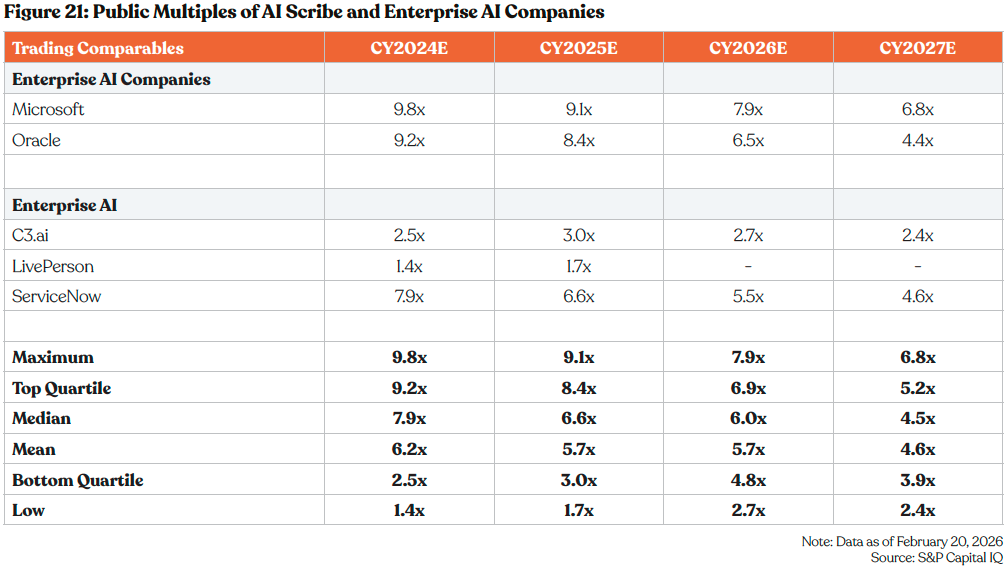
The following table shows the public peer multiples of AI Scribe and Enterprise AI companies. These multiples provide a useful reference for valuing Ambience Healthcare. Given that Ambience Healthcare is a pure play AI company for healthcare administration, we believe the startup’s valuation multiple should command a premium over its public peers.
About Manhattan Venture Partners
Our Research Methodology
Manhattan Venture Research provides clients with accurate, timely, and innovative research into the companies and sectors we cover. To that end, we have established an experienced team of analysts, researchers, economists, and industry veterans that focus exclusively on private companies with a proven track record of success. Producing quality research on a private company is uniquely challenging. Our analysts communicate with ex-employees, early investors, VCs, competitors, suppliers, and others to gather valuable information about the company under coverage. This information enables us to create unique financial models that value the underlying company and provide insight to our clients and industry experts, leveraging years of experience working for bulge bracket firms. Manhattan Venture Research reports include business and financial aspects of late-stage companies. These reports include but are not limited to industry overviews, competitor analysis, SWOT analysis, products (existing and in development), management and key directors, risks and concerns, other proprietary channels, historical financials, revenue projections, valuations (using various matrices and valuation recommendation), waterfall analysis, and a capitalization table.
Information Access Level Classification System (IALCS)
Manhattan Venture Research uses an Information Access Level Classification System (IALCS) to make clear the degree of access offered by the company(s) covered in all research reports.
Each research report is classified into one of three categories depending on its classification. The categories are:
I++: The company covered by the research report provided substantial disclosures to Manhattan Venture Partners.
I+: The report was prepared following partial disclosure by the company, including publicly available financial statements, and/or is based on conversations with past or present company employees.
I: All reports are prepared using a mosaic research approach. Not all companies are willing and able to provide substantive access to management and information. In I reports no direct access was granted.
About the Analyst
antosh Rao has over 25 years of experience in equity research with a primary focus on the technology and telecom sectors. He started his equity research career at Prudential Securities and later moved to Dresdner Kleinwort Wasserstein, Gleacher & Co, and Evercore Partners, where he followed Telecom and Data Services. Prior to joining Manhattan Venture Partners, he was the Managing Director and Head of Research at Greencrest Capital, focusing on private market TMT research. Santosh has an undergraduate degree in Accounting and Economics, and an MBA in Finance from Rutgers Graduate Business School. While at Gleacher & Co he was ranked leading telecom equipment analyst by Starmine/Financial Times
Disclaimer
I, Santosh Rao, Head of Research, certify that the views expressed in this report accurately reflect my personal views about the subject, securities, instruments, or issuers, and that no part of my compensation was, is, or will be directly or indirectly related to the specific views or recommendations contained herein.
Manhattan Venture Research is a wholly-owned subsidiary of Manhattan Venture Holdings LLC (“MVP”). MVP may currently and/or seek to do business with companies covered in its research report. As a result, investors should be aware that the firm may have a conflict of interest that could affect the objectivity of this report. Investors should consider this report as only a single factor in making their investment decision. This document does not contain all the information needed to make an investment decision, including but not limited to, the risks and costs.
Additional information is available upon request. Information has been obtained from sources believed to be reliable but Manhattan Venture Research or its affiliates and/or subsidiaries do not warrant its completeness or accuracy. All pricing information for the securities discussed is derived from public information unless otherwise stated. Opinions and estimates constitute our judgment as of the date of this material and are subject to change without notice. Past performance is not indicative of future results. MVP does not engage in any proprietary trading or act as a market maker for securities. The user is responsible for verifying the accuracy of the data received. This material is not intended as an offer or solicitation for the purchase or sale of any financial instrument. The opinions and recommendations herein do not take into account individual client circumstances, objectives, or needs and are not intended as recommendations of particular securities, financial instruments, or strategies to particular clients. The recipient of this report must make its own independent decisions regarding any securities or financial instruments mentioned herein. Periodic updates may be provided on companies/industries based on company-specific developments or announcements, market conditions, or any other publicly available information.
Copyright 2025 Manhattan Venture Research LLC. All rights reserved. This report or any portion hereof may not be reprinted, sold, or redistributed, in whole or in part, without the written consent of Manhattan Venture Research. Research is offered through VNTR Securities LLC.
What’s a Rich Text element?
Heading 3
Heading 4
Heading 5
The rich text element allows you to create and format headings, paragraphs, blockquotes, images, and video all in one place instead of having to add and format them individually. Just double-click and easily create content.
Static and dynamic content editing
A rich text element can be used with static or dynamic content. For static content, just drop it into any page and begin editing. For dynamic content, add a rich text field to any collection and then connect a rich text element to that field in the settings panel. Voila!
How to customize formatting for each rich text
Headings, paragraphs, blockquotes, figures, images, and figure captions can all be styled after a class is added to the rich text element using the "When inside of" nested selector system.
Ready to partner with MVP?
